Balance Exercises for Seniors Who Want to Stay Active and Independent
Do you wonder why some older people seem steadier on their feet than others? Their ability to move independently and maintain a sense of control over their bodies is likely a result of intentional practice. Balance declines as people age, so it takes an exercise plan and determination to maintain this skill.
Flexibility, strength training, and targeted balance exercises for seniors should be a cornerstone of any older adult’s exercise routine. Learn why balance is important and start making small changes to improve your well-being today.
Why Better Balance Is The Secret To An Adventurous Lifestyle
What does having “good balance” mean? If you can balance well, you have good coordination between your brain and body, and you’re able to control your muscles and joints to move in the way you want. Being able to balance helps seniors prevent falls, which are among the leading causes of emergency room visits for older adults. However, this isn’t the only goal of improving your balance. Having better balance can help seniors:
- Maintain a sense of independence in daily life
- Boost confidence in their abilities to complete tasks
- Attend social events and connect with others
- Play with grandchildren and pets with less fatigue
For seniors who want to accomplish their “want-to-do” lists, which may include travel, spending time with family at events, or trying new hobbies, balance is essential. Over time, gaining physical stability can lead to a healthier body and increase overall emotional confidence.
Fundamental Daily Movements For Stability And Coordination
Engaging your body in balancing and mobility exercises helps train your brain to balance more effectively over time. Here are five balance exercises for seniors to start with:
- Single-leg stands: The ability to stand on one leg may seem simple, but it gradually declines as you age. This means that while a 25-year-old may be able to stand like this for a minute or more, a 70-year-old who can stand on one leg for 30 seconds is doing quite well. Practice standing with your feet together, then lift one leg a few inches off the ground. Hold this pose for a few seconds on each side.
- Heel-to-toe walking: This exercise is a little bit more difficult, but it’s excellent for improving balance. Step one foot in front of the other as you walk, placing your heel at the toe of the other foot and repeating, as if you’re walking on a tightrope.
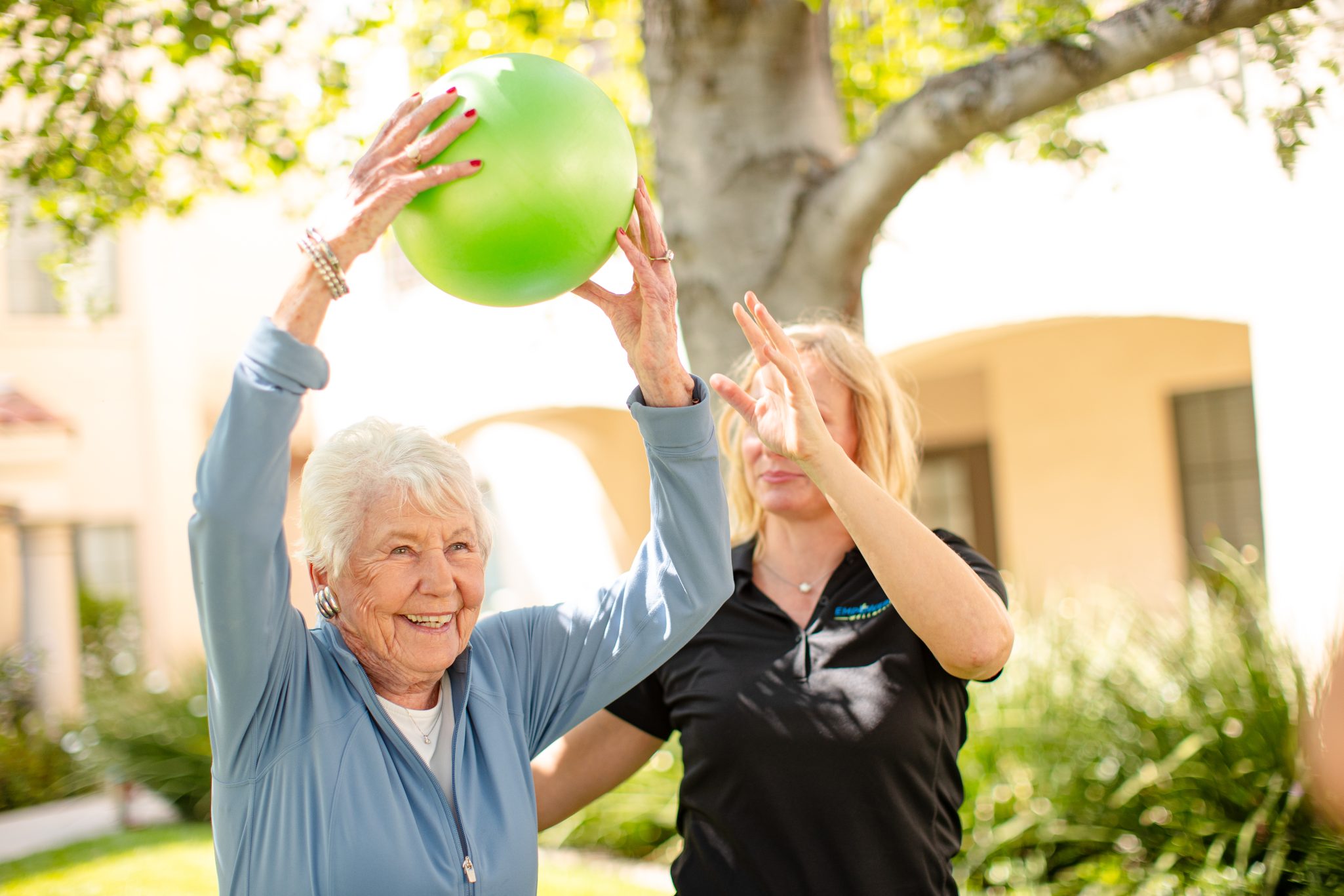
- Tiptoe reach: Stand with your feet hip-width apart and hold a ball overhead. Next, raise onto your tiptoes while holding the ball in the air. Try to repeat this a few times in a row.
- Leg sweeps: Again, stand with your feet together. Lift one of your feet in front of you and gently “sweep” it around to the back to engage your core muscles and improve lower body strength. Imagine you’re circling your foot from the 12 o’clock to the 6 o’clock position.
- Pillow standing: This stability training exercise might seem easy at first glance, but it can be difficult. While standing on a pillow, lift one foot off the ground (similar to the single-leg stand in exercise #1). By using a wobblier surface, you are forced to engage your muscles, joints, and brain differently to achieve balance.
If you’re wondering how to improve balance in the elderly population, you’re on the right track to boosting overall wellness. Balance is a key component of both mental and physical well-being. By engaging your body and brain in these simple exercises every day, you will build strength and improve your ability to navigate many situations. Check in with your physical therapist or medical provider if you have any questions, special concerns about mobility, or medical conditions.
Strengthening Your Core To Support Upright Mobility
It may seem that “good posture” is simply keeping your head up and your shoulders back. However, sitting like this is not the same as building a strong core that naturally leads to good posture. Core exercises are important for strengthening the muscles in your abdomen, pelvis, and back that support the spine.
When you slouch, you create a ripple effect in which your core weakens as your shoulder muscles tighten to hold your body upright. Because your core serves as your body’s center of gravity, having weakness in this area is also detrimental to your ability to balance.
Strengthening your core as an older adult may not look like intense planks and push-ups. Try these two exercises:
- Standing marches: Marching in place while lifting your knees to a 90-degree angle can engage the muscles deep within your core. There’s no need to speed up while marching as you aren’t doing cardio. In fact, slow core exercises can be just as effective.
- Back leg lifts: While lying on a mat, lift your legs together until they reach a 90-degree angle, then lower them back down to the mat. Don’t strain or attempt to lift them farther than is comfortable. Alternatively, try lifting one leg at a time.
Smart Progressions: How To Safely Challenge Yourself
While you may be eager to push yourself to develop muscle and build stability for the sake of your balance, it’s important to exercise safely. Balance exercises are tricky because they work with your body’s ability to stand up straight, so you run the risk of falling over while practicing.
Even people well into their 80s and 90s can improve their balance with the right support. Be smart about the risks you take and speak to your medical provider, physical therapist, or community support staff about your fitness goals. You might close your eyes, reduce support, or include objects like pillows to make your balance exercises more challenging without compromising your safety.
The Power Of Communal Movement And Mind-Body Wellness
What’s the best exercise for seniors who wish to improve their balance? If you enjoy group fitness, you may be tapping into the sense of encouragement many people experience when exercising together. Communal movement can motivate you to push through temporary fatigue and discomfort — and you can have fun with others working toward similar goals.
Mind-body wellness holds that mental and physical health are interlinked. Gentle movement classes such as yoga and tai chi, which operate at a slow, steady pace, can be very beneficial for fostering the mind-body connection. They can also help seniors improve their balance.
Flourishing Within A Wellness-Centered Community
At Senior Resource Group, we believe that one size does not fit all when it comes to balance exercises for seniors — or any other type of wellness. Along with the art classes, cultural events, and educational activities we provide, we also feature several holistic wellness and mindfulness programs in our state-of-the-art residential settings. Our ZEST programs foster the connection between mind, body, and soul, and programs such as The Club and Dine Your Way focus on connecting seniors with others to improve their overall health and enrich their lives.
If you’re ready to take the next step and see what luxury senior living means, we’re here to answer your questions. Contact Senior Resource Group to take a tour, discuss mind-body wellness programs for our residents, and see everything our communities have to offer.